Quit Vaping Cold Turkey or Taper? How to Choose Your Best Way
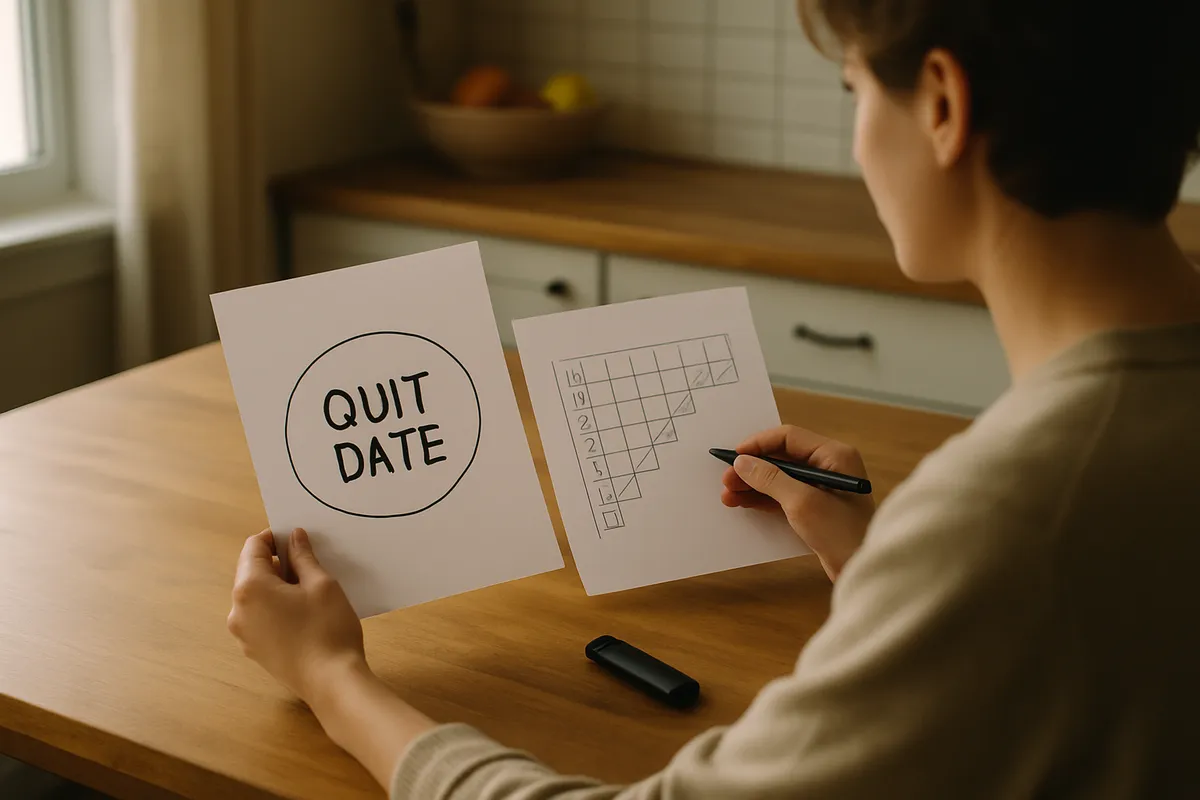
Deciding whether to quit vaping cold turkey or taper is less about finding the “one right method” and more about matching the approach to your brain and life. Evidence from cigarette research suggests quitting abruptly can lead to slightly higher success rates, especially when people also use nicotine replacement like patches or gum (Cochrane; NHS). At the same time, many people feel too anxious to stop all at once, particularly with high‑nicotine vapes and constant puffing habits.
A practical rule: if your vaping is moderate and you like clear lines, a planned quit date and going cold turkey may suit you. If your use is heavy, or you’ve failed cold turkey before, a structured taper plus nicotine replacement and support may be more realistic. Either way, the best way to quit vaping is the one you can stick with, backed by tools, social support, and a plan for cravings.
What’s the difference between quitting cold turkey and tapering?
Cold turkey means you set a quit date and stop vaping completely on that day. No “just a few hits,” no backup disposable. Withdrawal can feel intense but is usually shorter and more defined.
Tapering means you slowly reduce how much or how often you vape before quitting fully. You might cut nicotine strength, limit puffs per day, or restrict vaping to certain times.
Here’s a quick comparison:
| Approach | Pros | Cons | Best fit for… |
|---|---|---|---|
| Cold turkey | Faster, simpler, clear boundary | Sharper withdrawal, higher early cravings | Moderate use, likes “all‑in” changes |
| Structured taper | Gentler, can build confidence | Takes more planning, risk of stalling | Heavy use, anxiety, past failed quits |
Takeaway: Both paths can work; the right choice depends on your nicotine level, personality, and past attempts.
What does the evidence say: cold turkey or gradual?
Most solid data comes from cigarette research, which still gives useful clues for vaping. A large randomized trial and later review found that people who set a quit date and stopped abruptly had slightly higher long‑term quit rates than those who cut down first, when both groups used nicotine replacement (Cochrane, NHS).
Public health agencies like the CDC and Health Canada emphasize that either method can work if it’s paired with behavior support and, for many people, nicotine replacement.
We don’t yet have the same volume of long‑term data for e‑cigarettes, but the basic nicotine dependence patterns are similar. What matters most is commitment plus support, not whether you reduce for 2 weeks first.
Takeaway: Abrupt quitting has a small edge in research, but you’re more likely to succeed with the method you feel ready to follow.
How to quit vaping cold turkey safely
If you choose cold turkey, give yourself structure so “all at once” doesn’t mean “chaos.”
- Pick a quit date within 1–2 weeks.
- Remove triggers: remove devices, pods, and chargers the night before.
- Plan nicotine replacement (patches, gum, or lozenges) if they’re safe for you; ask a pharmacist or doctor if unsure.
- Map your danger times (driving, gaming, after meals) and decide what you’ll do instead.
- Tell at least one person and ask them to check in.
- Prepare for withdrawal: irritability, trouble focusing, and strong cravings are common in the first week (Truth Initiative).
Tools like a craving timer or an app with short guided exercises (for example, Aeris’s SOS‑style craving sessions) can help you ride out the intense 3–5 minute spikes.
Takeaway: Cold turkey works best when it’s planned, not impulsive, and when you have a concrete strategy for your worst cravings.
How to taper down vaping in a structured way
Tapering only helps if it’s specific and time‑limited. Otherwise it easily becomes “cutting back” forever.
You can taper by:
- Nicotine strength: step down mg/mL over several weeks.
- Puffs per day: set a daily cap and lower it on a schedule.
- Time windows: allow vaping only at certain times, then shrink the window.
A simple taper structure:
- Set a final quit date (for example, 4–6 weeks from now).
- Use a nicotine intake calculator or puff tracker to see your real baseline.
- Cut your use by ~20–25% each week.
- Add nicotine replacement as you drop, if appropriate, so your brain still gets some nicotine while you break habits.
- Switch fully to NRT (or nicotine‑free) on your quit date.
Takeaway: A taper should feel like walking down a staircase with a clear bottom step, not wandering down a ramp with no end.
How do I choose the best way to quit vaping for me?
Ask yourself a few key questions:
- How dependent am I? All‑day nic‑salt vaping or waking at night to vape points toward a slower taper plus strong support.
- How have past quits gone? If you’ve tried tapering and never reached zero, a firm quit date might work better this time.
- What’s my mental health like right now? If you’re in a fragile spot, talk with a clinician before making a sudden change.
Many people combine methods: a short, 1–2 week taper to a lower level, then an all‑in quit day with NRT and support. Tracking your streak and savings with tools like a quit‑vaping progress tracker or cost calculator can keep motivation visible.
Takeaway: The “best way to quit vaping” is personalized. Start from your history, support needs, and what feels doable in the next month.
When should I get medical or extra support?
Quitting nicotine can temporarily worsen anxiety, low mood, or attention problems (Cleveland Clinic). It’s important to talk with a doctor or nurse practitioner if:
- You have heart disease, are pregnant, or have complex medical conditions.
- You’ve had severe depression, panic attacks, or thoughts of self‑harm.
- You’ve tried multiple times to quit and always relapse early.
They can review over‑the‑counter nicotine options or discuss prescription choices that might fit your situation. If you ever feel at risk of harming yourself, contact a crisis line or emergency services right away.
Takeaway: Information online is a starting point, not medical advice. If quitting feels overwhelming or unsafe, bring in a professional early, not as a last resort.
Bottom line: Cold turkey and tapering are both valid paths. Choose the one you’re most willing to follow, add nicotine replacement and behavior support if they’re appropriate for you, and treat quitting as a skill you build over time, not a test you pass or fail once.
Frequently asked questions
Is it better to quit vaping cold turkey or slowly?
Studies in smokers show quitting abruptly may lead to slightly higher success rates when people also use nicotine replacement. But for heavy or very anxious vapers, a structured, time‑limited taper can be easier to stick with. The best method is the one you can actually follow, supported by tools and people.
How long should I taper before quitting vaping completely?
Many people do well with a 2–6 week taper, with a clear final quit date. Longer tapers often turn into “cutting back” without ever stopping. Whatever schedule you choose, write it down and reduce on purpose each week instead of just hoping your use drops.
Can nicotine replacement help me quit vaping?
Yes. Patches, gum, and lozenges can ease withdrawal while you break the habit of putting a device to your mouth. Public health agencies like the CDC and Health Canada consider nicotine replacement safer than continued vaping or smoking for most adults, but it’s still wise to ask a clinician if it’s right for you.
What if I choose a method and slip back into vaping?
A slip doesn’t mean the method failed or that you can’t quit. Look at when and why you vaped, tighten your plan around that trigger, and restart as soon as you can. Many successful ex‑vapers needed several tries and small adjustments before it finally stuck.
Get through the next craving
Aeris is a calm quit-vaping companion — SOS rescue for cravings, a real buddy, and a plan at your pace. Free on iPhone.
Get Aeris free